
The company is using a clear strategy and a wide range of initiatives to drive forward climate protection in robust fashion
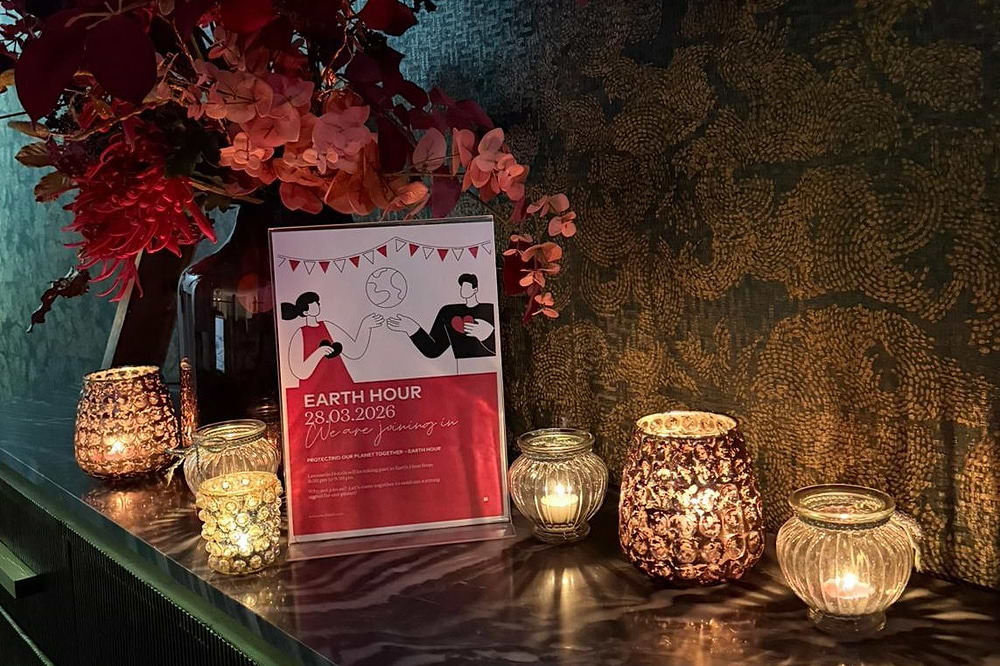
Berlin, 27 March 2026. The Leonardo Hotel Group is once again involving itself in Earth Hour this year and will be turning out the lights in hotels right across Europe as a visible sign of support for climate protection and sustainability. The event, which will take place on the evening of 28 March, forms part of a more comprehensive ESG approach which also incorporates elements such as increasing energy efficiency and expanding circularity and resources management.
In many Hotels in Germany, England, Spain, Italy, Poland, the Netherlands, Ireland, Hungary, Romania, Czechia, Austria, Switzerland and France will all be dimming their lights and deploying candles to create a warm and cosy atmosphere in a conscious bid to reduce levels of illumination.
Energy & climate protection
Leonardo Hotels is using formats like Earth Hour to pursue a structured approach in environmental and climate protection. A strategic framework encompassing extensive environmental, social and governance (ESG) measures was developed in the group’s Central Europe division as early as in 2022. This package has undergone continuous further development ever since in line with the progress achieved whilst also taking new and adjusted priorities into account.
One key component is measurable energy management with the goal of increasing energy efficiency by 10 percent in the period from 2023 to 2027. Individual hotels, including in Berlin, Hamburg, Munich and Mainz, are already relying solely on renewable energies.
The objective is for all the group’s hotels to obtain Green Key certification by the end of 2026. Green Key is a highly prestigious and rigorous award, and numerous criteria covering areas such as energy and water efficiency and waste management make it one of the most important benchmarks in the European hotel sector.
Circularity & resources management
Last year, Leonardo worked in conjunction with the WWF on a project aimed at strengthening circularity. A pilot scheme launched at the newly opened The Posthouse Berlin – Leonardo Limited Edition systematically checked the recycling potential of furniture and decorative elements that were surplus to requirements. Objects were then fed back into the relevant material cycles. Thanks to collaboration with specialised partners, around 60% of this stock was earmarked for reuse rather than for disposal. The findings which have emerged will inform future renovation projects and will also be documented in a structured project report.
The company’s partnership with the “Too Good To Go” programme is also enabling it to take on an active role in reducing food waste. By July 2025, almost 100 hotels right across Europe had succeeded in salvaging around 130,000 food parcels. This led to the avoidance of over 350 tonnes of CO₂ – the approximate equivalent of the emissions caused by around 40-50 average European households or by several millions of kilometres travelled by car.
Against the background of the requirements of corporate sustainability, Leonardo Hotels is integrating ESG criteria into its main business processes in an increasingly systematic way. Energy efficiency, circularity and measures to reduce the use of plastics and to encourage biodiversity at the company’s locations are some examples in this regard. Formats such as peer-to-peer learning and network events also supplement group-wide knowledge transfer.
“Participation in Earth Hour is an important matter for us,” said Natascha Michaelsen, Senior Project Manager ESG/CSR at Leonardo Hotels Central Europe. “Sustainability is enshrined within our corporate strategy, which is currently being further developed in line with the progress achieved whilst also taking new and adjusted priorities into account. These range from the measurement of relevant CO₂ key indicators to renovations works which follow the principles of circularity and also extend to include social commitment.”